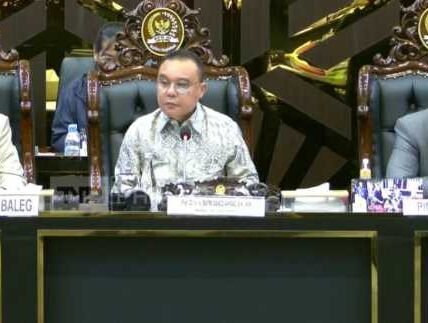
Led by Sufmi Dasco, Baleg DPR RI Approves Agrarian Reform Bill for Plenary Session Ratification

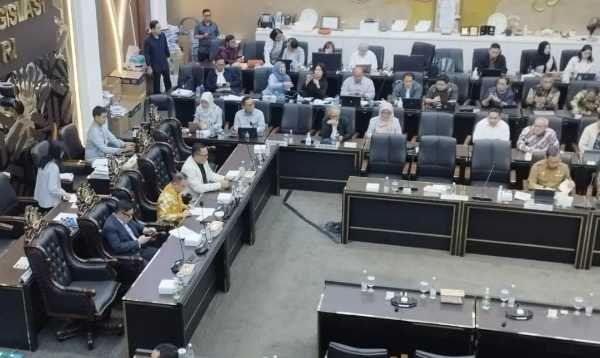
The House of Representatives’ Legislation Body (Baleg DPR RI) approves forwarding the Agrarian Reform Bill to the DPR Plenary Session.
progresifjaya.co.id, JAKARTA – The House of Representatives’ Legislative Body (Baleg DPR RI) has decided to approve the Bill on Agrarian Reform Regulation, advancing it to the next stage—a House Plenary Session—for ratification into law.
Deputy Speaker of the House, Sufmi Dasco Ahmad who presided over the meeting, made the decision after all Baleg members gave their approval and representatives from all political party factions had presented their respective views.
“We seek the meeting’s approval to proceed with the results of the deliberations on the Agrarian Reform Bill in accordance with prevailing laws and regulations,” said Sufmi Dasco, the proposal was subsequently approved by meeting participants at the parliamentary complex in Jakarta on Monday, September 21, 2026.
Ahmad Iman Sukri, Chair of the Baleg Working Committee (Panja), explained, that the bill comprises 14 chapters and 53 articles. Based on prior deliberations, he noted that both the government and the House share a common perspective regarding the importance of—and serious attention toward—resolving agrarian conflicts by accelerating agrarian reform.
Regarding its substance, the bill regulates the implementation of agrarian reform through the State’s right of control, aiming to guarantee the fulfillment, restoration, and recognition of the people’s rights to land and other agrarian resources, while prioritizing their utilization for the designated subjects of agrarian reform.
The bill also defines the objects and subjects of agrarian reform—including land derived from both conflict-resolution and non-conflict contexts—and identifies priority recipient groups, such as farmers, cultivators, farm laborers, fisherfolk, indigenous communities, women, and the poor.
Furthermore, the bill mandates the establishment of an agrarian reform implementing agency that operates under and reports directly to the President, with authority covering planning, implementation, supervision, and the resolution of agrarian conflicts. In addition to establishing the institution, the bill mandates the creation of a supervisory board to ensure transparency, participation, accountability, and effectiveness in the implementation of agrarian reform.
The bill also outlines mechanisms for conflict resolution that are effective, transparent, and equitable, prioritizing deliberation, the restoration of social relations, legal certainty, and the restitution of community rights.
“The Working Committee meeting involved constructive debate, ultimately resulting in an agreed-upon set of provisions expected to serve as a solution to the issues and conflicts surrounding the implementation of agrarian reform,” said Iman Sukri. (Bembo)