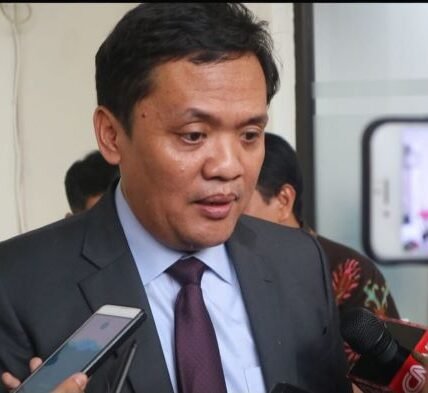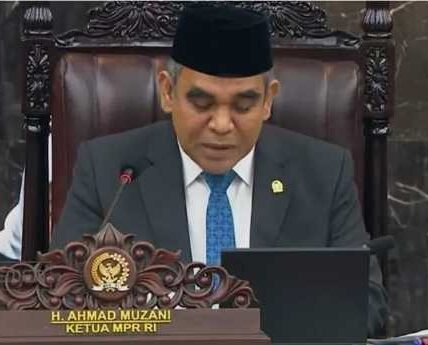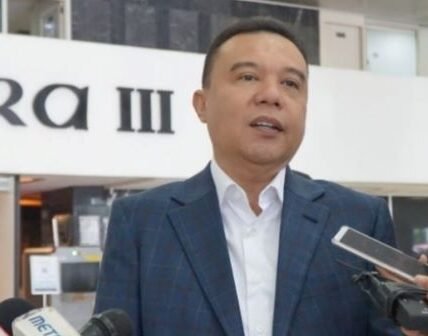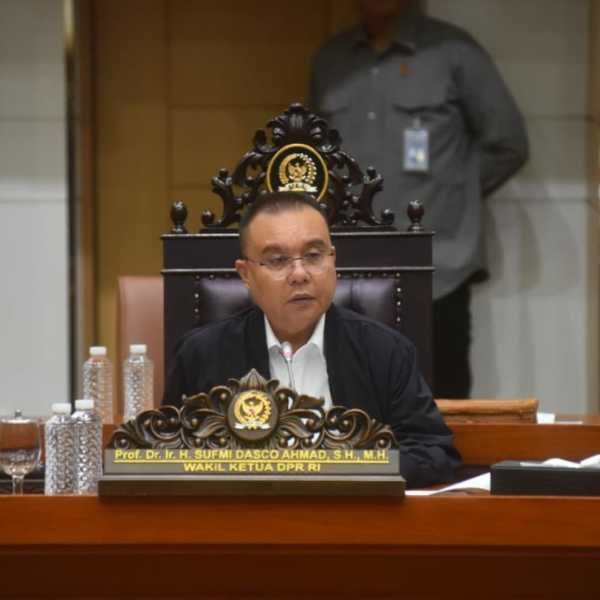
Deputy Speaker of the Indonesian House of Representatives and also the Daily Chair of the Gerindra Party Central Executive Board, Sufmi Dasco Ahmad.
progresifjaya.co.id, JAKARTA – Sufmi Dasco Ahmad is a prominent figure in Indonesian politics, filled with maneuvers, compromises, and the tug-of-war of interests.
He is not only a high-ranking state official; he is also a key actor behind the scenes. His role plays a strategic role in maintaining national political stability and serves as a strong bridge between the legislative and executive branches.
In circles of power, President Prabowo Subianto once referred to him as “Mouse Deer.” A fable character whose metaphorical imagery is more vivid and connotative.
In Nusantara narratives, the mouse deer is the most popular fable character. The mouse deer is known as a representation of wit, agility, and the ability to outwit larger or stronger opponents using intelligence rather than physical strength.
This representation is clearly evident in Sufmi Dasco Ahmad. The Gerindra Party’s Executive Chairman, born on October 7, 1967, is recognized as a politician with a keen eye for analyzing situations. He also possesses the ability to emerge from pressure and is adept at strategic maneuvering without having to display his strength outright.
The question now is, are all these recognitions used to safeguard the nation’s interests? Or are they simply to maintain balance?
As Deputy Speaker of the Indonesian House of Representatives (DPR RI), Sufmi Dasco holds a position that not only determines the direction of legislation but also serves as a communication hub for various political forces. In a political climate that is often fragmented, Sufmi Dasco’s role is crucial.
It must also be remembered that Indonesia is not a country with a single voice. It comprises various interests, political parties, economic groups, community organizations, and even global pressures. Therefore, a capable figure is needed who can deftly weave differences into understanding.
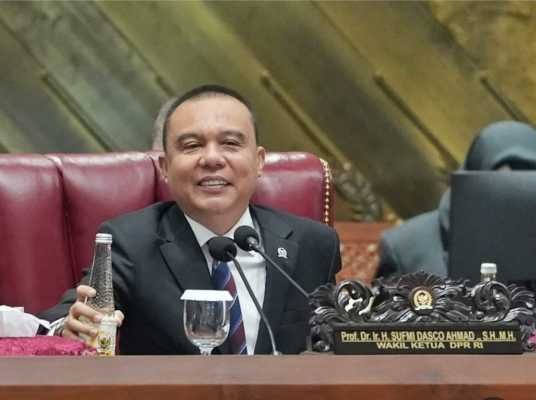
That is precisely what Sufmi Dasco is currently playing as the main actor in unifying national politics. Acting as a unifying figure who never dismisses differences.
Sufmi Dasco is recognized for his ability to manage differences without letting them escalate into conflict. This is a high-level political skill, and not everyone can do it.
One concrete example can be seen in the resolution of agrarian conflicts. Sufmi Dasco pushed for the formation of a Special Committee for the Resolution of Agrarian Conflicts in the Indonesian House of Representatives (DPR RI) to find real solutions to land issues that frequently trigger social conflict in various regions.
He is also seen as successful in helping resolve crucial disputes, such as the dispute over four islands in Aceh, by bridging effective communication between the legislative and executive branches.
Regarding the management of conflicting opinions on social media, Sufmi Dasco has also called for an end to the culture of insults on social media, as the author has previously published. Sufmi Dasco encourages the public to prioritize constructive and polite criticism for the sake of national unity, especially when differences of opinion arise in the public sphere.
Demands for Consistency in Siding with the People
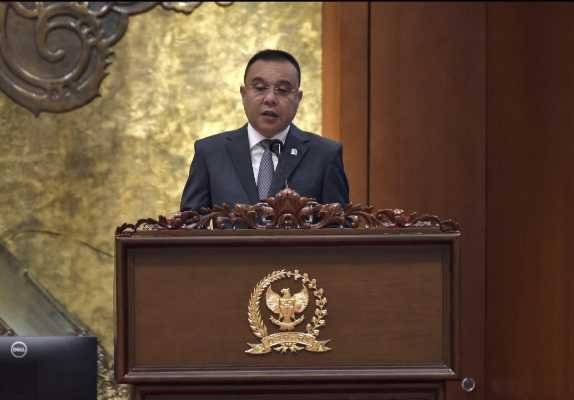
Dasco seems to understand that politics is not solely about winning or losing. It is also about understanding how all parties can remain at the same table.
Indeed, the author believes this should not be viewed from a romantic perspective. Rather, it should be viewed as a responsibility that must be continually tested.
Frankly, Sufmi Dasco’s political style, which tends to be calm and sparse with rhetoric, is often misunderstood as passive. However, in many cases, this is precisely the most effective political style.
In the DPR RI, decisions aren’t always made through grand speeches or open debates. They also involve lobbying, negotiation, and internal consolidation. Sufmi Dasco plays a role well in this regard.
However, quiet politics isn’t an excuse to avoid transparency. The public still has the right to know, and students have the right to criticize. And public officials also have an obligation to explain themselves. Politics is not an exclusive space accessible only to a select few.
And like the fabled figure “Kancil,” Sufmi Dasco has been called to be more than just visible within the inner circle. He also has the power to benefit the wider community.
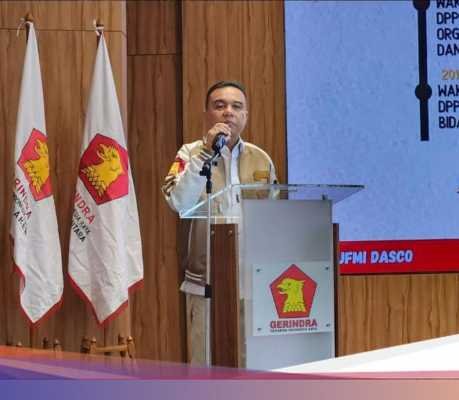
It’s undeniable that Sufmi Dasco’s current position is closely tied to power. As a core member of the Great Indonesia Movement Party and a close associate of President Prabowo Subianto, he has access that many other politicians lack.
This access is both a strength and a test. In politics, proximity to power is often likened to a double-edged sword.
On the one hand, it facilitates coordination and expedites decision-making. On the other hand, it also has the potential to create conflicts of interest if not managed with integrity.
As a unifier of national politics, Sufmi Dasco certainly cannot simply represent one group. He must stand above all interests and ensure that every policy truly sides with the people.
He must also open up broader dialogue. It’s not enough to communicate only with the political elite, but also with students, academics, and civil society.
The task of this “mouse deer” is truly complex. He must be able to restore public trust and be skilled at managing the internal affairs of institutions. He must also be able to open up space for justice, not conceal it.
The “mouse deer” is certainly not a perfect figure—perfection belongs only to Allah SWT. However, his consistent commitment to the people will continue to be demanded and maintained in Indonesian politics. As an Indonesia rolling in as the peacekeeper.
Writer/Editor: Bembo