IPW Views Kapolri ‘s “Iron-Fist” Rapid and Massive Rotations as Likely to Spark Internal Friction

Indonesia Police Watch (IPW).
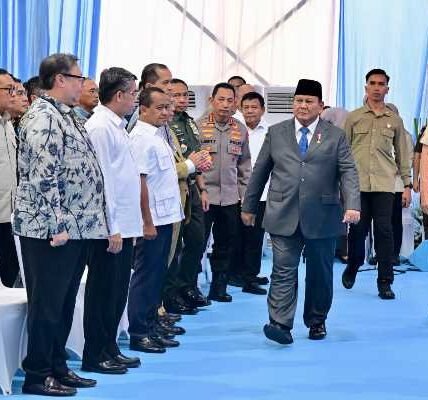
progresifjaya.co.id, JAKARTA – Indonesia Police Watch (IPW) assesses that the new Kapolri, Jenderal Pol Suyudi Ario Seto, is not merely consolidating the organization. Instead, he is orchestrating a regrouping of like-minded allies—a move that appears as a radical shake-up immediately following his inauguration to lead the force.
Indeed, just one day after receiving House of Representatives (DPR) approval and being sworn in by President Prabowo on October 1, 2026, this 1994 Police Academy graduate moved swiftly to overhaul the force’s internal leadership. Police officials within the inner circle of the former Kapolri, Jenderal Pol Listyo Sigit Prabowo, were immediately ousted—with the exception of Komjen Pol Wahyu Hadiningrat (formerly the Assistant for Planning and Budgeting), who was subsequently appointed Wakapolri.
Supervisory and leadership support officials—such as the Inspector General (Irwasum), Assistant for Operations (Astamaops), Assistant for Planning and Budgeting (Astamarena), Assistant for Human Resources (As SDM), Head of the Professional and Security Division (Kadiv Propam), and Head of the ICT Division (Kadiv TIK)—as well as heads of key operational units (Intelligence/Kabaintelkam, Criminal Investigation/Kabareskrim, and Public Order/Kabaharkam) were immediately replaced via Telegram Letter Number ST/2205/X/KEP./2026, dated October 2, 2026.
Furthermore, employing an “iron-fist” approach, the new Kapolri overhauled personnel positions at the regional level by replacing 19 Kapolda and rotating other support structures, such as the Head of the Education and Training Institute (Kalemdiklat), Head of the Police Staff and Leadership School (Kasespim), and Governor of the Police Academy (Akpol).
In total, 88 high-ranking officers (pati) and mid-ranking officers (pamen) from the era of Jenderal Pol Listyo Sigit Prabowo were removed from their posts. IPW considers the radical move by Jenderal Pol Suyudi Ario Seto to be atypical for a police officer newly appointed to lead the vast Polri institution—unless driven by the influence of political “forces” behind the scenes.
This is because the police philosophy emphasizes embracing others, being accommodative, persuasive, and collaborative, rather than acting radically or confrontationally. Such an approach was observed when Jenderal Pol Idham Azis and Listyo Sigit Prabowo assumed the role of Kapolri, as well as with their predecessors upon taking office.
This tendency stems from the culture of seniority and the “mentor-mentee” relationships established during Police Academy training; consequently, when consolidating power or reshuffling personnel, leaders prioritize maintaining stability within the corps.
When Idham Azis was appointed Kapolri, he took seven days to execute personnel transfers without immediately filling the strategic position of Head of the Criminal Investigation Agency (Kabareskrim) that he had vacated. The Kabareskrim post was only filled on December 6, 2019, via official letter number ST/3229/XII/KEP./2019.
In contrast, Jenderal Pol Suyudi Ario Seto took a different path; just one day into his tenure, he altered numerous key positions. Conversely, Idham Azis had left one of the Polri’s most strategic posts vacant for over a month.
Meanwhile, the decision-making pace of former Kapolri Listyo Sigit Prabowo also differed. He established legitimacy before restructuring the organization. As a Kapolri with strong political backing from President Jokowi, he faced unique organizational challenges, he was a Police Academy graduate from the Class of 1991 and relatively junior compared to several senior generals at the time of his appointment. Thus, he didn’t immediately dismantle the entire old elite hierarchy.
Listyo Sigit’s initial move was not to conduct a massive purge. However, he established an institutional narrative centered on Presisi (Predictive, Responsible, and Transparent Justice)—emphasizing transparent service, fair law enforcement, and a police force that is firm yet humane.
Listyo Sigit began restructuring the organization’s leadership through a series of reassignments on February 18, 2021. He moved Komjen Pol Agus Andrianto from Head of the Security Maintenance Agency (Kabaharkam) to the more strategic role of Head of the Criminal Investigation Agency (Kabareskrim). Subsequently, Komjen Pol Arief Sulistyanto shifted from Head of the Education and Training Institute (Kalemdiklat) to Kabaharkam, Komjen Pol Rycko Amelza Dahniel moved from Head of the Intelligence and Security Agency (Kabaintelkam) to Kalemdiklat, and Paulus Waterpauw stepped in as the new Kabaintelkam.
Both former Kapolri Idham Azis and Listyo Sigit Prabowo held views starkly different from the radical or confrontational approach adopted by Kapolri Jenderal Pol Suyudi Ario Seto. His move to implement a massive, total overhaul is highly likely to trigger internal friction within the Polri.
This is because the displaced officers will inevitably feel aggrieved; furthermore, the very purpose of such transfers—intended as routine rotations to foster organizational solidarity—may fail to achieve that outcome, given the reliance on an approach driven by the exercise of power.
Immediately upon taking office, Jenderal Pol Suyudi launched a sweeping personnel overhaul, starting with the central leadership before moving on to program consolidation. This strategy was designed to ensure the new Kapolri could firmly control the institution under a unified command.
Kapolri Suyudi didn’t merely rearrange existing pieces on the chessboard; he also replaced them with like-minded figures to secure control over the board’s key positions.
This has raised questions among the public, did this rapid internal personnel reshuffle originate solely with the new Kapolri.
According to the IPW, the selection of these names likely occurred prior to the decision to nominate a successor to Listyo Sigit. Had the process begun only after the inauguration, it would have required significant time—particularly if routed through the Police High-Rank Promotion and Appointment Council (Wanjakti), a process that typically takes days. Given that the Wanjakti was composed of Listyo Sigit’s loyalists, such a scenario would have been virtually impossible.
Ultimately, a radical move was finalized to oust the power brokers of the Listyo Sigit era from the core structure. Specifically, Komjen Pol Wahyu Widada was moved from the position of Inspector General of the Polri (Irwasum) to a High-Ranking Officer (Pati) role within the Inspectorate for assignment to the Ministry of Agrarian Affairs and Spatial Planning/National Land Agency (ATR/BPN). Similarly, the Head of the Criminal Investigation Agency (Kabareskrim), Komjen Pol Syahardiantono, was shifted to a High-Ranking Officer role within the agency for assignment to the Executive Office of the President (KSP). Similarly, the Head of the Intelligence and Security Agency (Kabaintelkam), Komjen Pol Yuda Gustawan, was reassigned to a high-ranking officer (Pati) role within the agency for a posting at the Executive Office of the President (KSP). Meanwhile, Komjen Pol R.Z. Panca Putra, the Head of the Education and Training Institute (Kalemdiklat), was reassigned to a high-ranking officer role within the Criminal Investigation Agency (Bareskrim) for a posting at the Ministry of Law.
A particularly harsh blow was dealt to a Police Academy (Akpol) classmate of the Kapolri from the Class of 1994. Irjen Pol Pipit Rismanto—who had served as the Kapolda of West Java for less than three months—was abruptly removed from his post and reassigned to the Ministry of Law. His removal is strongly suspected to be linked to the fact that West Java is the largest vote bank for the 2029 political contest.
From an organizational sociology perspective, these reassignments can be viewed as a reduction in internal power, even without a formal demotion in rank. At first glance, it appears as though they have been “cast aside.”
Members of Listyo Sigit’s inner circle—whether classmates from the Akpol Class of 1991 or others—undoubtedly share this sentiment.
The IPW also observes that, alongside sidelining Listyo Sigit’s circle, the Kapolri immediately brought in personnel from outside the standard structure—specifically from the National Narcotics Agency (BNN) and the State Intelligence Agency (BIN)—to fill new positions within the Polri.
In this initial round of reassignments, Brigjen Pol Agus Dwi Hermawan—previously a high-ranking officer at Bareskrim assigned to the BNN—was appointed as the Kapolri’s Assistant for Logistics (Aslog). Brigjen Pol Putu Putera Sadana moved from a Bareskrim/BNN role to become the Deputy Head of the Criminal Investigation Agency (Wakabareskrim). Additionally, Brigjen Pol Deni Dharmapala shifted from a Bareskrim/BNN role to become the Kapolri’s Assistant for Human Resources (As SDM).
Furthermore, Brigjen Pol Roy Hardi Siahaan moved from a Bareskrim/BNN role to become the Kapolda of Central Java, while Brigjen Pol Rachmad Iswan Nusi was appointed as the Wakapolda of West Java. Meanwhile, regarding officials drawn from external bodies—specifically the State Intelligence Agency (BIN)—into the Polri, Irjen Pol Dedy Kusuma Bakti was transferred to the role of Head of the Intelligence and Security Agency (Kabaintelkam). Additionally, Irjen Pol Arman Achdiat was appointed Kapolda of Riau, and Irjen Pol Victor Alexander Lateka was transferred to the position of Deputy Commander of the Mobile Brigade Corps (Wadankorbrimob).
What is certain is that Kapolri, Jenderal Pol Suyudi, through these “radical moves,” has immediately reshuffled numerous key command nodes. These include oversight (Irwasum), criminal investigation (Bareskrim), intelligence (Baintelkam), public security (Baharkam), internal discipline (Propam), education and training (Lemdiklat), and counter-terrorism (Densus).
Simultaneously, there has been a reshuffle of 19 regional commands—a move carrying significant political and organizational weight, marking a stark contrast to the era of Jenderal Pol Listyo Sigit Prabowo. Sigit has now entered the inner circle of the Palace as Chief of Presidential Staff, succeeding Dudung Abdurachman, who has been entrusted with the role of Coordinating Minister for Political and Security Affairs. (Bembo)