Analyzing the Initials of President Prabowo’s Potential Vice President, S, AM, or MA

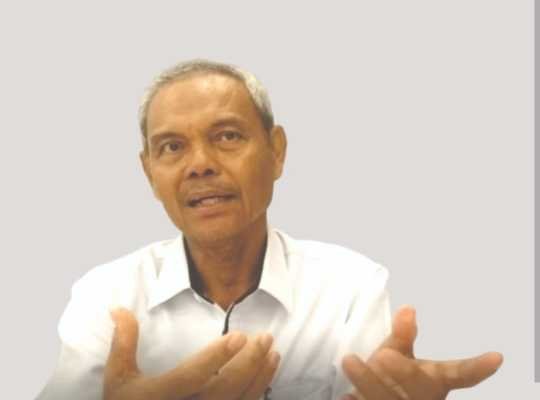
Political Sociology Analyst, Dr. Muhammad Asdar.
progresifjaya.co.id, JAKARTA – The discourse surrounding a potential change in the Vice Presidency has gained significant traction in the public sphere. Following a meeting between President Prabowo Subianto and the chairpersons of eight political parties at the Bogor Palace on Friday, November 13, 2026, the public has become engaged in a new guessing game: identifying the initials of a prospective successor.
While the initials S and AM were initially the most frequently mentioned, the focus has now shifted toward AM and MA.
The meeting at the Bogor Palace reportedly involved discussions regarding potential candidates for the Vice Presidency. It is understood that the People’s Consultative Assembly (MPR) has requested two names to be proposed by the President, with an inauguration planned for December 2, 2026.
However, the Palace has yet to announce an official name. This information vacuum has given rise to various forms of speculation, including the guessing of initials.
On social media and in political discussion groups, the initial S has been linked to several names already circulating, such as Sufmi Dasco Ahmad and Sugiono. Meanwhile, the initial AM has sparked more speculative interpretations, as there is no single dominant name upon which the public has settled; it could refer to Ahmad Muzani, or perhaps—as a play on the initials—Agus Harimurti Yudhoyono, who is also frequently mentioned in the mix. As for the initial MA, it could point to senior Golkar Party politician Maman Abdurrahman or former Vice President Ma’ruf Amin.
Observers suggest that this initials game is more than just a pastime; it serves as a strategic tool for the political elite and their supporters to shape public opinion without explicitly naming individuals.
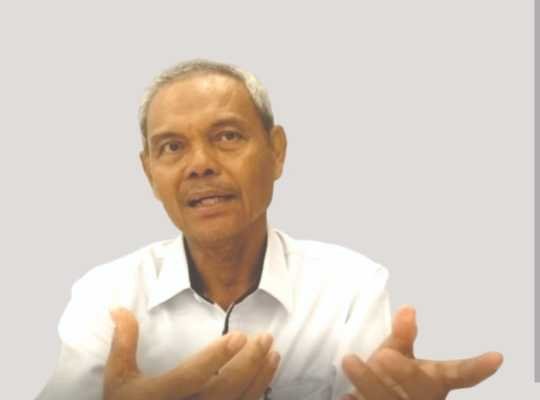
“When a name cannot yet be disclosed, initials serve as a code. This code is then released to the public to gauge their reaction,” said Dr. Muhammad Asdar, an analyst of political sociology, on Saturday, November 14, 2026.
According to Asdar, there are three reasons why this guessing game involving initials has become so prevalent:
- First, it is politically safe. Using initials is not the same as formally declaring a name. If met with rejection, those who floated the name can simply claim it was merely a public interpretation.
- Second, it serves to test the market. Names that become the subject of widespread discussion trigger surveys, media coverage, and public debate. Through this, the elite can gauge who is the most widely accepted.
- Third, it creates the impression that a decision has already been made. If a particular name keeps surfacing, the public may assume that the individual behind it is the closest to the Palace—even if that is not necessarily the case.
Furthermore, Asdar warns that if this game is allowed to continue, it will shift the focus away from the core issues—competence and compatibility with the President—toward who is most adept at playing with coded signals.
“In political sociology, this is a form of elite circulation that has devolved into a ‘hijacking’ of the process. Each faction attempts to hijack the process by steering public opinion—through online influencers (buzzers), surveys, and now, through the use of initials,” he says.
He points to Vilfredo Pareto’s theory on the circulation of elites and Max Weber’s concepts regarding legitimacy. He argues that if a Vice Presidential candidate emerges from a process of guesswork and manufactured public pressure, their social legitimacy will be flawed from the outset—even if they are legally valid, having been elected by the MPR (People’s Consultative Assembly).
In his analysis, Asdar asserts that the greatest challenge facing President Prabowo is not merely choosing between candidates—such as those represented by the initials S, AM, or MA—but rather putting an end to this culture of mutual sabotage.
“A strong leader does not allow their own allies to undermine one another. A strong leader is one who can say: ‘Stop this maneuvering.’ This position is not something to be seized; it is a trust to be bestowed,” says Asdar.
If President Prabowo can steer the process back onto a respectable path—by proposing two candidates who are both qualified, competent, and acceptable to all factions—then a “soft landing” can be achieved.
Conversely, if the process is left to spiral, whoever is ultimately chosen will emerge from a process fraught with deep-seated grievances. The losing faction will feel as though they have been robbed, while the winning faction will feel compelled to seek revenge down the line.
As of the time of this report, there has been no official confirmation from the Palace or the People’s Consultative Assembly (MPR) regarding the names of the proposed candidates. The public is advised to await an official announcement rather than merely speculating based on initials.
“The people do not care who is robbing whom. They only care about whether the ‘aircraft’ that is Indonesia lands safely, or crashes because the pilots are too busy watching their passengers fight over seats,” said Asdar, concluding his analysis. (Bembo)