Author’s Educational Analogy: The Kanit Regident Must Be an Extrovert and Highly Extraverted Figure


Head of the Regident Unit’s armband.
progresifjaya.co.id, JAKARTA – All Polres stations in Indonesia are known to have a position as Head of the Registration and Identification Unit (Kanit Regident) within their traffic work units. This position is also a core part of the sacred motto, Dharmakerta Marga Raksyaka, a symbol of the Polri Traffic Corps (Korlantas Polri), which means working sincerely and wholeheartedly to protect and serve road users.
This position is usually filled by a first-ranking police officer, ranging from Ipda, Iptu, to AKP, depending on the status of the assigned Polres station. If the Polres station is ordinary, the position is filled by a first-rank officer with the rank of Ipda or Iptu. Meanwhile, if the Polres station is C-Suite or a higher-level Polres, such as a Polresta or Polrestabes, this position is filled by a first-rank officer with the rank of AKP.
The primary responsibility of this position to the public is to provide administrative services for vehicles (BPKB, STNK) and drivers’ licenses (SIM). However, in practice, there is also an obligation to always prioritize the principles of openness, transparency (without extortion), and high-quality friendliness.
The next key emphasis, which is also absolutely essential for a Kanit Regident, is being friendly, communicative, interactive, sensitive, and empathetic. Once these qualities are fully mastered, it will be easy to instill a professional, communicative, and solution-oriented service culture (such as the 5S culture: Smile, Greet, Greet, Be Polite, and Courteous) within the ranks.
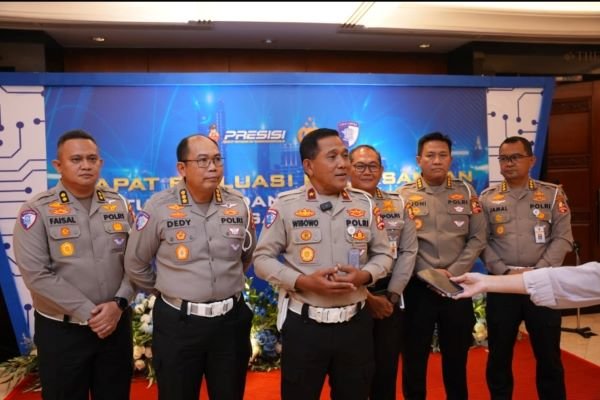
Director of Registration and Identification of the Korlantas Polri, Brigjen Pol Wibowo.
In this logical explanation, the author wishes to convey the opinion that as an official tasked with serving and satisfying the public, the most suitable individual for this position is an extrovert. This individual will always be depicted and valued as someone with an open, friendly, active, communicative, interactive, and empathetic personality.
In psychology, such as the Big Five Personality Traits theory, these characteristics are also closely related to high levels of extroversion. People with this personality trait greatly enjoy social interaction and gain energy from being with others.
However, if we look at the specific combination of these traits, there’s another breakdown of psychological scientific terms to sort and classify them.
The breakdown of terms consists of four items for classification. The first is sociability. This item describes the main characteristics of a friendly and communicative person in communication psychology.
Next is empathy. This characteristic describes a person’s cognitive and affective ability to understand and feel what others are experiencing.
Next is high interpersonal intelligence. This item is a term from Howard Gardner’s Multiple Intelligences theory to describe people who are highly skilled at communicating, understanding, and interacting with others.
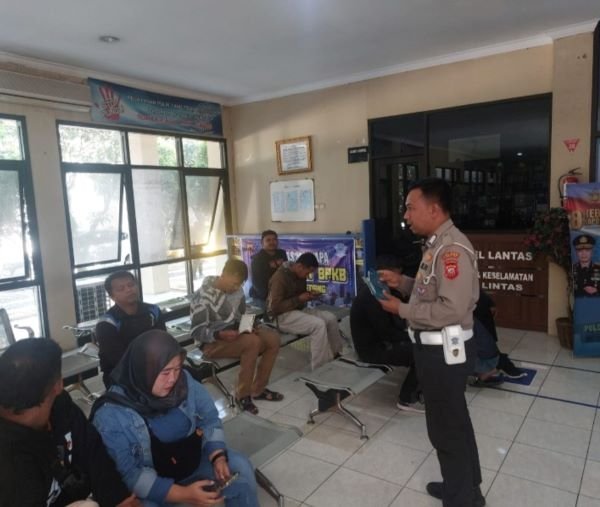
Registration and Identification service activities at the Polres level.
The final item is referred to as a people person. This is a popular/social psychology term for someone who easily builds good relationships and feels comfortable with a wide variety of people.
Frankly, the combination of extroversion capabilities possessed by a Head of the Kanit Regident would theoretically lead to a willingness to prioritize friendly, open, and transparent principles. This resonates with the mandate of bureaucratic reform, which mandates administrators to provide clear information, procedural certainty, and equal treatment without discrimination to all members of the public.
Meanwhile, when discussing the transformation of the Polri Traffic Police, the author prefers to use the SERVQUAL model, or service quality, as a theoretical reference for comparison.
This theory was introduced by three American marketing experts and researchers, A. Parasuraman, Valarie Zeithaml, and Leonard Berry in the mid-1980s.

Registration and Identification service activities at the Polres level.
The main concept of this theory is an approach to measuring public service satisfaction based on five main dimensions. The five main dimensions are Tangibles (physical evidence of facilities), Reliability, Responsiveness, Assurance, and Empathy (employee empathy).
Tangibles are the appearance of physical facilities, equipment, and communication tools. Reliability is the ability to provide promised services accurately and dependably.
Next is Responsiveness, which is the willingness to help customers and provide prompt service. Assurance is the knowledge, courtesy, and skills of traffic police officers at Satpas and Samsat to foster public trust. Empathy is the ability to provide genuine and individualized attention to each person, whether they are a driver’s license applicant or a taxpayer.
All of these insights were further refined by Harold Dwight Lasswell (1902–1978), a leading American political scientist and pioneer of communication theory, widely recognized as one of the fathers of global communication science. He combined political science, sociology, and psychology to analyze the communication process.
The formula he created reads, Who Says What, In Which Channel, To Whom, With What Effect. In today’s digital era, the term “Channel” has rapidly expanded to include various social media and internet platforms.

Registration and Identification service activities at the Polres level.
This formula is also commonly used to analyze and dissect the communication process into its five main elements.
Who?: Refers to the communicator or sender of the message.
Says What?: Refers to the message, content, or information conveyed.
In Which Channel?: Refers to the medium or intermediary used to convey the message (e.g., TV, radio, or the internet).
To Whom?: Refers to the recipient (receiver or communicant), whether an individual or an audience.
With What Effect? (What’s the impact?): Refers to the effect or result (change in attitude, opinion, or behavior) that occurs in the recipient after receiving the message.
So, looking back at the five main elements of the formulation, the analytical diction is the extrovert’s personal style and demeanor, as well as their level of extraversion. Now, just assess yourself honestly. Who am I?
Writer/Edito: Bembo