IPW Affirms Police Regulation 10 of 2025 is a Bold Step by the Polri Leadership to Face VUCA Conditions

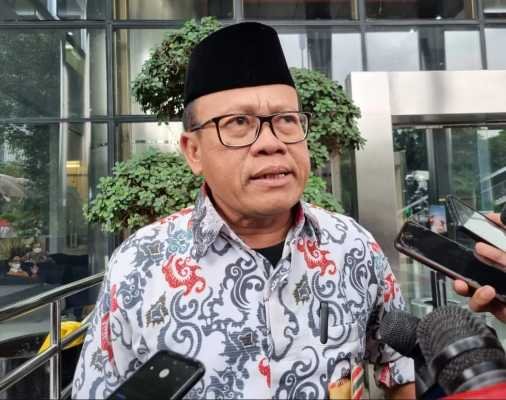
IPW Chairman, Sugeng Teguh Santoso.
progresifjaya.co.id, JAKARTA – Indonesia’s current political, economic, and social situation appears to be entering a VUCA condition, an acronym for Volatility, Uncertainty, Complexity, and Ambiguity. Generally speaking, VUCA describes a highly dynamic, unstable, complex, unclear, and unpredictable global environment or situation. Therefore, adaptation and flexible strategies are required to address this. This is precisely what the Polri leadership is currently facing with regard to Police Regulation 10 of 2025.
Police Regulation 10 of 2025, signed by the Kapolri, Jenderal Pol Listyo Sigit Prabowo, regulates the assignment of active police officers to certain ministries and institutions that have a direct correlation with security, guarding, law enforcement, and public protection functions.
Previously, Constitutional Court Decision No. 114/PUU-XXIII/2025 explicitly mandated that members of the Polri be inactive or resign if they held civilian positions. This has become a hot topic of debate among various groups. And that’s perfectly legitimate.
Responding to the VUCA-style complication of this issue, the Chairman of Indonesia Police Watch (IPW), Sugeng Teguh Santoso, stated, that the various interpretations debating this issue are like half-cooked eggs. They’re debating understandings with half-baked substance and impotent logical correlations.
“The current debate regarding Perpol 10 of 2025 is a form of ambiguity. There are various interpretations that create ambiguity or doubt in understanding, whether in words, sentences, phrases, or situations,” explained Sugeng Teguh Santoso to progresifjaya.id, Sunday, December 14, 2025.
“The debate ultimately becomes ambiguous because it makes it difficult for people to grasp its true meaning,” he added.
According to Sugeng, the two legal regulations, Perpol 10 of 2025 and Constitutional Court Decision No. 114/PUU-XXIII/2025, appear to have been deliberately “mixed” with the aim of creating a legal antinomy, where there is a clear contradiction between the two legal regulations, both of which are equally justifiable.
“From an implementation perspective, the resulting interpretation is ultimately unfair to the Polri. From an institutional perspective, the Indonesian National Armed Forces (TNI), based on Article 47 paragraph 1 of Law Number 3 of 2025, actually stipulates that its personnel may serve in several ministries and state institutions. This means they have entered the civil service without having to retire. Why shouldn’t the Polri be allowed to do so?” Sugeng asserted.
He continued, explaining that Perpol 10 of 2025 is a bold step by the Polri leadership to protect the institution and its members from uncertain conditions. Furthermore, the Constitutional Court has never issued an absolute prohibition on assigning Polri members outside the police force.
Therefore, Sugeng continued, MK Decision Number 114/PUU-XXIII/2025, along with Article 28 paragraph (3) of Law Number 2 of 2002 concerning the Polri, which were used as the primary reason for rejecting Perpol 10 of 2025, are merely textual interpretations.
“The Constitutional Court has never issued an absolute prohibition on Polri members being assigned outside the police force. And Article 28 paragraph (3) must also be interpreted comprehensively, along with its explanation, to interpret the norm,” said Sugeng.
“Article 28 paragraph (3) states that Polri members can hold positions outside the police force after resigning or retiring from the police force. Positions that have no connection to the police force are allowed. This means, a contrario, or logically, that as long as they are still connected to the police force, there’s no problem, and they don’t have to retire to hold positions within their assigned duties,” he continued.
Furthermore, he emphasized, the debated Regulation 10 of 2025 actually regulates the assignment of active Polri members to certain ministries and institutions directly connected to security, guarding, law enforcement, and public protection. So, in short, the regulation falls within the law, not outside it. So why debate it. Damn it! (Bembo)