Bea Cukai Watch Officially Established to Strengthen Public Oversight in the Customs Sector


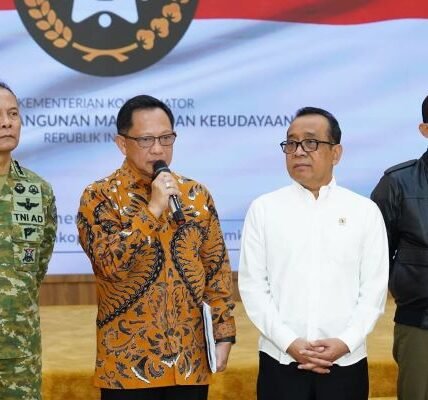
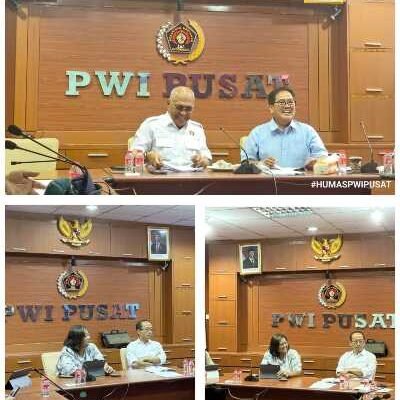
The establishment of Bea Cukai Watch (BCW).
progresifjaya.co.id, JAKARTA – Figures from diverse backgrounds have agreed to establish Bea Cukai Watch (BCW), a civil society forum for analysis and oversight focused on customs and excise issues in Indonesia.
The agreement to form BCW was reached on Wednesday, August 19, 2026, by Teguh Eko Wiyono, Anrico Pasaribu, Dar Edi Yoga, Achmad Rizal, Jimmy Endey, Budi Utomo, Rinto Hartoyo Agus, and Antonius Bramantyo. Under this agreement, Jimmy Endey was appointed as the Presidium/Coordinator of Bea Cukai Watch.
The establishment of BCW is driven by the importance of public participation in fostering customs and excise administration that is transparent, professional, and accountable, while providing legal certainty for the public and the business community.
The presence of BCW is also considered relevant given the significant challenges involved in overseeing the flow of goods and addressing various customs issues that have drawn public attention, including the prevalence of smuggling cases.
BCW Presidium/Coordinator Jimmy Endey stated, that BCW was not formed merely to take over the functions of the government or law enforcement agencies. Instead, the organization positions itself as part of civil society, conducting analysis, monitoring, offering constructive criticism, and engaging in policy advocacy.
“BCW aims to be a critical and independent partner. When Customs performs well and successfully protects the state’s interests, we must certainly appreciate it. However, when policies or enforcement actions require criticism, the public must also have the space to exercise objective, data-driven oversight,” said Jimmy.
According to the founders, the customs sector holds a strategic position as it is directly linked to state revenue, export-import flows, the protection of domestic industries, investment, and the business sector, as well as efforts to combat smuggling and illegal trade.
Therefore, public oversight is required not only regarding alleged irregularities but also concerning the quality of regulations, public services, consistency in law enforcement, and the protection of the rights of the public and business entities.
Focus on Data-Driven Analysis and Oversight
In its operations, BCW will conduct research and analysis on customs and excise policies, receive and review public complaints, engage in policy advocacy, host public discussions, and submit recommendations to ministries, agencies, and law enforcement bodies as necessary.
BCW will also focus on various strategic issues, such as smuggling, import-export activities, the circulation of illegal goods, the management of goods seized during enforcement actions, customs services, state revenue, and legal certainty for the public and the business community.
The founders emphasize that every analysis and statement issued by BCW must be grounded in facts, data, regulations, and a verifiable process.
BCW will also uphold the presumption of innocence and provide an opportunity for clarification to any party subject to its analysis.
“Oversight must not devolve into passing judgment. BCW must be able to distinguish between facts, allegations, and legal conclusions. That will be one of our working principles,” the founders agreed.
Context The Issue of Gold Smuggling
The establishment of BCW coincides with renewed public attention regarding the issue of gold smuggling.
On the same day, national media reports revealed that the Directorate General of Customs and Excise had thwarted dozens of gold smuggling attempts between January and August 2026.
According to BCW, this phenomenon demonstrates that customs issues are not merely about successful enforcement actions; they also open up broader areas for analysis regarding smuggling patterns, the monitoring of entry and exit points for goods, consistency in law enforcement, the origin of goods, and potential state revenue that needs to be safeguarded.
BCW holds the view that the authorities’ success in thwarting smuggling attempts deserves appreciation. At the same time, transparency and accountability in every enforcement process remain crucial to maintaining public trust.
Preparing the Structure and Work Program
Following the declaration of its establishment, the Presidium and the founders will finalize the organizational structure, institutional framework, work program, and internal regulations.
BCW will also initiate dialogue with academics, legal and customs practitioners, business players, the media, civil society organizations, and various other stakeholders.
In the near future, BCW will prepare studies addressing current issues in the customs and excise sector as part of a public contribution toward strengthening governance and legal certainty.
BCW also emphasizes that it will operate independently and will not serve as a tool for the political, business, or personal interests of any specific parties.
“The ultimate goal is simple: state interests must be protected, state revenue safeguarded, and law enforcement upheld, yet public rights and legal certainty must not be overlooked,” concluded Jimmy. (Bembo)