Deputy Polri Chief Emphasizes Importance of Early Mitigation for Potential Disasters and Social Conflicts

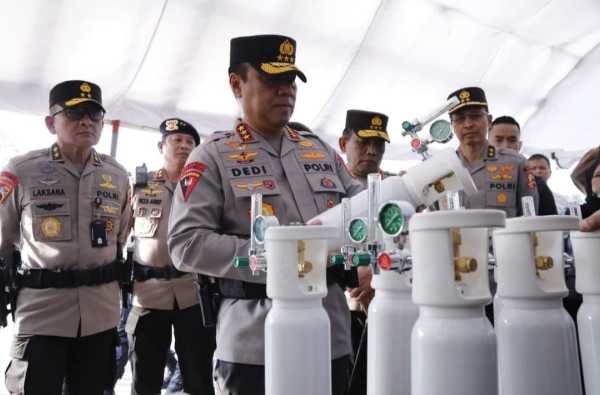
Deputy Chief of the Polri, Komjen Pol Dedi Prasetyo.
progresifjaya.co.id, BOGOR REGENCY – Deputy Polri Chief, Komjen Pol Dedi Prasetyo emphasized the importance of preventive measures in addressing potential disasters and social conflicts. According to him, preparedness and the ability to implement early mitigation strategies are key to preventing widespread impacts on the community.
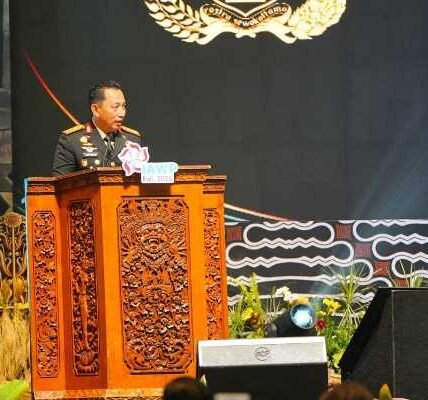
He conveyed this during a troop deployment ceremony held to ensure readiness for potential disasters and social conflicts in 2026, taking place in Cikeas, West Java, on Monday, September 7, 2026.
Deputy Chief Dedi stated, that Indonesia faces a high level of disaster vulnerability due to its complex geological, geographical, and climatological conditions. Indonesia’s location within the “Ring of Fire” further elevates the risk of earthquakes, tsunamis, and volcanic eruptions.
“These phenomena serve as a reminder that natural disasters can occur anytime and anywhere. Therefore, preparedness must be established across all stages: pre-disaster, emergency response, and post-disaster,” said Deputy Chief Dedi.
Data from the National Agency for Disaster Countermeasure (BNPB) indicates that 1.730 natural disaster events have occurred in Indonesia between January 2026 and the present. These disasters—predominantly floods, extreme weather, landslides, and forest and land fires—have resulted in 397 fatalities and the displacement of over 4 million people.
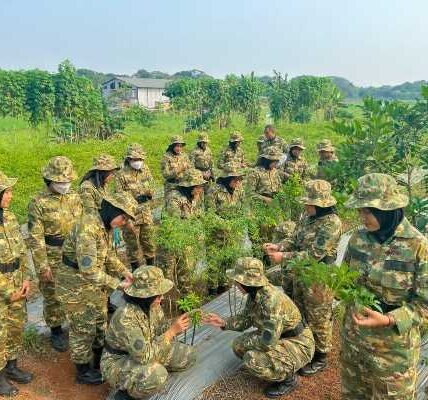
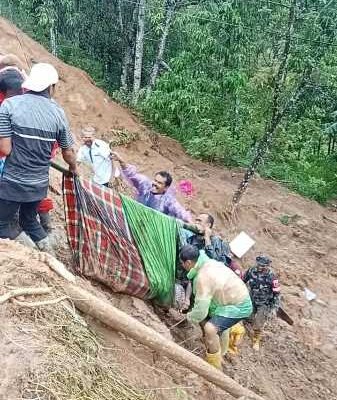
Amidst these conditions, the Polri has ensured the readiness of personnel and equipment to provide rapid responses through Operation Aman Nusa II. Response efforts range from victim search and evacuation, site security, and traffic and evacuation route management, to the provision of humanitarian aid for affected communities.
“With prepared personnel, adequate equipment, and swift action, the Polri must always be present among the public—providing a sense of security, alleviating the burden on affected communities, and delivering the best possible service in every disaster situation,” he asserted.
In addition to natural disasters, Deputy Polri Chief Dedi also warned the police force about the potential for social conflict triggered by various political, economic, socio-cultural, or security issues. He noted that such potential could also escalate within the digital space if not managed appropriately.
Consequently, the Polri have been instructed to strengthen early detection, early warning systems, and the mapping of potential vulnerabilities, as well as to conduct cyber patrols to monitor provocative narratives. Persuasive approaches must also be reinforced by engaging community leaders, religious figures, local governments, and all relevant stakeholders.
“When handling social conflicts, prioritize preventive measures to mitigate all risks and the long-term impacts borne by the community. Understand the root causes of issues in your respective areas and build close relationships with community leaders to mitigate the emergence of conflict,” he explained.
Deputy Chief Dedi also emphasized, that expressing opinions in public is a constitutional right of the people that must be respected and protected. Nevertheless, the police must remain prepared to prevent potential escalation so that situations do not devolve into conflict, violence, or disturbances to public order and security.
In conflict situations, police personnel must be capable of maintaining security, separating conflicting parties, protecting the public and vital infrastructure, and enforcing the law in a professional, proportionate, and fair manner.
Meanwhile, in the post-conflict phase, the police must play a role in supporting reconciliation and the restoration of security, as well as rebuilding public trust to prevent the recurrence of conflict.
He then highlighted two key points for all personnel involved in Operasi Aman Nusa I and Aman Nusa II. Regarding disaster management, every stage—from emergency preparedness and emergency response to post-disaster recovery—must prioritize the safety and recovery of victims.
“Accurate data serves as the foundation, rapid action is a necessity, and meticulous work guarantees safety,” he stated.
Regarding the handling of social conflicts, personnel are instructed to prioritize prevention, understand the root causes, and build close ties with the community. Should the situation necessitate firm action, any enforcement measures must be carried out in a measured and professional manner, adhering to the principle of ultimum remedium—treating law enforcement as a last resort.
Through this state of readiness, the Polri is committed to ensuring that the presence of the state is felt by the public, whether during disasters or in the face of potential social conflict, while simultaneously maintaining the stability of public security and order on a sustainable basis. (Bembo)