BCW Criticizes DJBC Strategy Against Illegal Excise Goods: Focus on Public Education Leaves Major Players and Networks Untouched


Customs and Excise Watch (BCW).
progresifjaya.co.id, JAKARTA – The Directorate General of Customs and Excise’s (DJBC) efforts to combat illegal excise goods—which emphasize educating the public and retail merchants—have drawn serious attention from Customs and Excise Watch (BCW).
BCW acknowledges, that education remains a necessary preventive measure. However, the fight against illegal excise goods must not shift focus to treating the general public and small-scale traders as the primary links in the chain that need fixing.
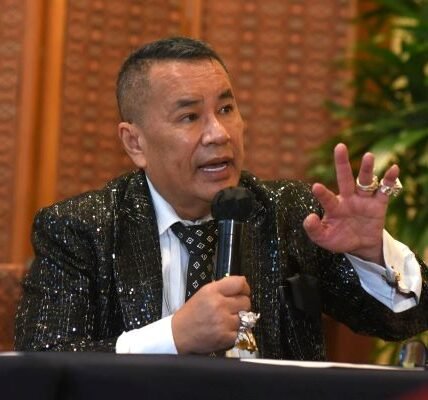
This statement was made by BCW Coordinator/Presidium member Jimmy Endey in Jakarta on Sunday, September 6, 2026, in response to news regarding Customs’ program to eradicate illegal excise goods through public education and capacity building for local officials.
In activities reported on September 4, 2026, Customs educated retail merchants on excise payment obligations, the affixing of excise stamps, the identification of illegal cigarettes, and relevant criminal regulations.
Customs also stated, that eradicating illegal excise goods requires the involvement of local governments, law enforcement agencies, business players, and the public.
According to Jimmy, while this approach is positive, it should not become the primary face of the campaign against illegal excise goods.
“The public certainly needs to be educated. However, the state should not be preoccupied with teaching people to distinguish between legal and illegal cigarettes while leaving larger questions unanswered: Who produces these illegal goods? Where do they come from? Who are the distributors and financiers? What does the supply chain look like? And why are these goods able to circulate widely, reaching even small local shops?” Jimmy explained.
BCW: Don’t Target Small Shops While Leaving the Source Untouched
BCW also questioned the effectiveness of the crackdown if operations are visible only at the merchant and retailer levels, while the exposure of production and distribution networks at higher levels is not transparently disclosed to the public. According to Jimmy, the presence of illegal excisable goods (BKC)—such as illicit cigarettes—at small shops represents the end of a distribution chain. Therefore, enforcement efforts should be more aggressive in targeting the upstream stages of that chain.
“Illegal cigarettes do not originate at small shops, nor are counterfeit excise stamps produced by consumers. These goods are manufactured, packaged, transported, and distributed through a network. Consequently, the entire chain must be dismantled, rather than stopping at small-scale retailers,” he asserted.
BCW has also urged the Directorate General of Customs and Excise (DJBC) to publicly disclose enforcement results categorized by the level of the perpetrators involved. This includes data on actions taken against retailers, distributors, transporters, manufacturers, and suppliers of counterfeit or used excise stamps, as well as the financiers or masterminds controlling the networks.
Customs authorities have previously stated that operations to combat illegal cigarettes are conducted across various regions, targeting distribution points and shipment routes alike. Therefore, according to BCW, the resulting enforcement data should serve to demonstrate whether law enforcement efforts are genuinely progressing from the downstream end of the chain toward the upstream source.
BCW also highlighted the use of excise stamps that are counterfeit, reused, misapplied, or incorrectly personalized.
According to Jimmy, it is not enough for the government merely to teach the public how to recognize the characteristics of illegal excise stamps.
“If counterfeit or ‘fake-yet-authentic-looking’ stamps are found, that is precisely where BCW’s questions begin. Who manufactured them? What printing technology was used? Who ordered them? How were they distributed, and who is the end user? The public shouldn’t just be asked to learn how to inspect stamps with ultraviolet light while the networks supplying the illegal stamps remain unexposed,” he emphasized.
During the event in Lampung—which was the subject of the aforementioned news report—officials did indeed demonstrate to vendors how to identify illegal cigarettes, both by the naked eye and by using ultraviolet light.
However, BCW believes that the discovery of these problematic excise stamps should serve as a gateway for an investigation to trace the entire supply chain.
BCW Calls for Internal Oversight
Beyond pursuing manufacturers and distributors, BCW also urges the Directorate General of Customs and Excise (DJBC) to ensure that the crackdown on illegal excisable goods (BKC) addresses issues of internal integrity.
BCW is not accusing specific officers of involvement without evidence. However, the possibility of willful negligence, information leaks, or official complicity must not be treated as a taboo subject for investigation if indications arise.
“If an illegal excisable goods network can operate for a long time on a large, organized scale, it is natural for the public to question the effectiveness of oversight. If there are indications of insider involvement, investigate it. If not, disclose the data. There should be no area immune to scrutiny,” Jimmy said.
According to BCW, this transparency is increasingly crucial given that the integrity of the DJBC is currently under public scrutiny following various legal cases involving Customs officials.
Do Not Use Education as the Sole Metric of Success
BCW also cautioned against positioning the volume of outreach activities, the number of shops visited, or the number of “Crush Illegal Cigarettes” (Gempur Rokok Ilegal) stickers displayed as the primary measures of success.
“Success in eradication isn’t measured by how many stickers are put up or how often awareness campaigns are conducted. The true metrics are whether the supply of illegal excisable goods (BKC) decreases, producers are prosecuted, distribution networks are dismantled, state revenue is secured, and major networks are broken up,” he explained.
Therefore, BCW has called on the DJBC to release data that allows the public to assess the effectiveness of the “Gempur Rokok Ilegal” (Crackdown on Illegal Cigarettes) program. This includes enforcement results categorized by the type and level of offenders, the number of cases reaching the investigation or legal resolution stage, the value of potential losses prevented or state revenue secured, and trends in the prevalence of illegal excisable goods.
BCW also emphasized, that public education and law enforcement are not mutually exclusive options. Education remains necessary but must serve as a complement to robust and targeted enforcement actions.
“BCW supports education. However, educational campaigns should not overshadow the dismantling of networks. The state possesses authority, personnel, intelligence capabilities, excise data, and law enforcement instruments that the public does not have,” he explained.
Jimmy stated, that BCW would continue to monitor policies regarding the eradication of illegal excisable goods and push for data-driven evaluations of the DJBC’s oversight effectiveness.
“BCW’s message is simple: don’t just crack down on the small shops. Crack down on the illegal factories, the distributors, the financiers, the excise stamp networks, and anyone protecting them. If any officials are proven to be complicit, take action against them too. Only then does the term ‘Crackdown on Illegal Excisable Goods’ truly have meaning,” said Jimmy.
According to him, this approach is crucial to ensure that small traders and the general public do not become the easiest targets for law enforcement, while the key players behind the illegal trade continue to operate.
“Don’t be sharp at the downstream end but blunt at the source. By all means, continue public education, but law enforcement must go after the root of the problem. BCW wants to see results, not just campaigns,” he reiterated. (Bembo)