Habiburokhman Emphasizes That the Asset Forfeiture Bill Targets More Than Just Corruption


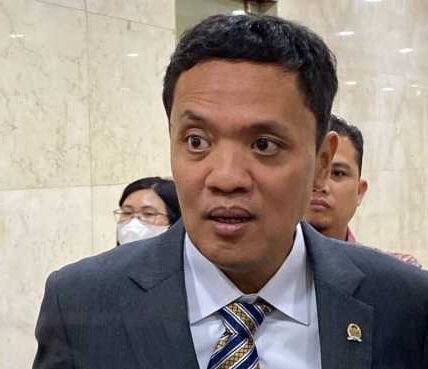
Chairman of Commission III of the DPR RI, Habiburokhman.
progresifjaya.co.id, JAKARTA – Habiburokhman, Chairman of Commission III of the House of Representatives (DPR RI), emphasized that asset forfeiture regulations in various countries do not target only corruption offenses. They also extend to a range of other crimes that have a broad impact on the state and society.
“In other countries, the scope of asset forfeiture laws goes beyond corruption. This is because there are other offenses that, in substance, also cause significant harm to the state and the general public,” Habiburokhman stated on Wednesday, September 2, 2026.
He cited examples of similar regulations implemented in the United States, the United Kingdom, and Australia. In the United States, through the civil forfeiture regime, law enforcement agencies can seize proceeds from crimes such as drug trafficking, money laundering, smuggling, and securities market manipulation.
Meanwhile, the United Kingdom has the Proceeds of Crime Act 2002 (POCA), which is reinforced by the Unexplained Wealth Orders (UWO) instrument.
“Its scope targets asset forfeiture for serious crimes, tax evasion, and organized fraud, without requiring a prior criminal conviction,” Habiburokhman said.
Asset forfeiture regulations in Australia are governed by the Proceeds of Crime Act 2002, covering organized crime, illicit drug trafficking, customs offenses, and large-scale financial crimes.
Domestically, Habiburokhman noted, that Commission III has received significant input suggesting an urgent need to include offenses such as narcotics trafficking, terrorism, investment fraud, environmental crimes, tax violations, and insurance sector crimes within the non-conviction-based asset forfeiture regime.
“The spectrum of harm caused by these crimes is clearly just as destructive,” he stated.
Habiburokhman stated, that application of the law in specific cases—such as narcotics and terrorism—would focus on severing the operational chains of criminal activity. In these instances, asset forfeiture can cut off financial flows and strip drug kingpins and terror networks of their logistical assets.
“This is the most effective way to cripple their ability to replenish their criminal ranks,” he said.
Meanwhile, for fraud cases within the financial and insurance sectors, this mechanism is expected to resolve obstacles hindering the restoration of victims’ rights.
However, he also emphasized the importance of integrity among law enforcement officials to ensure the law is not misused during implementation.
He asserted, that no criminal should be allowed to profit from unlawful acts; the principle that “crime does not pay” must be upheld.
In closing, Habiburokhman reaffirmed the commitment of the House of Representatives (DPR RI) to finalize comprehensive regulations.
“Commission III of the DPR RI is committed to ensuring the Asset Forfeiture Bill serves as a complete, progressive, and proportionate legal framework to recover state losses while comprehensively addressing losses suffered by the public,” he emphasized. (Bembo)