With the Indictment Structured as Cumulative-Alternative, IPW Perceives a Prosecutorial Attempt to Mitigate the Sentence Sought Against Defendant Febry Andriansyah

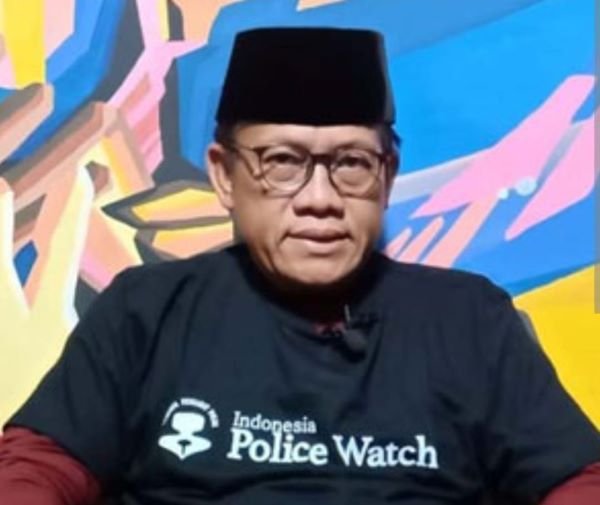
By: Sugeng Teguh Santoso
INDONESIA Police Watch (IPW) observes an attempt to curtail and truncate the scope of liability for defendant Febrie Adriansyah in corruption case No. 75/Pidsus-TPK/2026/PN at the Central Jakarta Corruption Court. The party allegedly responsible is the public prosecutor, who deliberately refrained from charging the defendant with the criminal acts of extortion, bribery, and/or the acceptance of gratuities—acts whose factual details were already outlined in the primary count of the second charge.
The prosecutor limited the charges against Febrie Adriansyah regarding the primary count of the second charge solely to money laundering (TPPU). This action by the public prosecutor raises suspicions that the prosecution intends to secure a lighter sentence for the defendant.
The public prosecutor’s indictment against Febrie Adriansyah is structured as a cumulative-alternative charge. The primary count of the first charge alleges that Febrie Adriansyah committed extortion while in office against the victim, Tan Kian. Subsequently, the primary count of the second charge accuses him of money laundering involving the receipt of money, shares, and land from various parties.
It is not a matter of the public prosecutor lacking knowledge or competence. Rather, regarding the primary count of the second charge, there appears to be a deliberate decision not to indict the defendant for specific criminal acts of extortion in office, bribery, and/or the acceptance of gratuities. The competence of the public prosecutor is beyond doubt; regarding the primary count of the first indictment, the actions of Febrie Andriansyah—carried out through Ferry Yanto Hongkiriwang, who received SGD 5.000.000 from Tan Kian—were clearly described as the criminal act of extortion while in office, as stipulated in Article 12 letter e of the Corruption Eradication Law.
However, in the primary count of the second indictment, Febrie Andriansyah was charged solely with money laundering. Yet, the factual details regarding the receipt of money, land, and shares were sufficient to qualify as acts of corruption. This has raised significant questions for the IPW and the public.
These questions arose following the disclosure of facts regarding the receipt of shares worth Rp14 billion from Michael Njoman, Rp20,6 billion from Tria Bellitonito; and Rp60 billion plus land assets in Cilincing, North Jakarta (9,260 m² valued at Rp77,070 billion) and The Nyaman Hotel on Jalan Kubu Anyar, Kuta District, Badung Regency (situated on three plots of land totaling 296 m² valued at Rp4,44 billion).
Furthermore, there were receipts of land measuring 213 m² (valued at Rp3,55 billion) and 880 m² (valued at Rp12 billion) from Andy Chandra Tan, as well as cash totaling Rp203,469 billion from various parties. These acts of receiving money and land were included only within the money laundering charge.
Yet, the facts detailed in the primary count of the second indictment could actually be classified as corruption offenses meeting the elements of extortion while in office, bribery, and/or the acceptance of illicit gratuities. The public prosecutor’s decision to charge the defendant solely with money laundering—while omitting the predicate offenses of extortion in office, bribery, and/or the acceptance of gratuities—creates a legal vulnerability regarding the construction of the indictment.
This situation could serve as grounds for the defendant, Febrie Adriansyah (himself a senior prosecutor), and his legal counsel to challenge the indictment on the basis that it is unclear, incomplete, and vague, potentially leading to a ruling that the indictment is null and void by operation of law.
In essence, the prosecutor identified the underlying criminal act within the indictment’s framework as a standalone instance of corruption but chose not to formally charge it as a corruption offense.
IPW urges the public to closely monitor the corruption trial of Febrie Adriansyah at the Central Jakarta Corruption Court to ensure the legal process is conducted properly, thereby allowing justice to be served through the imposition of an appropriate sentence.
However, the criticisms and assumptions raised by IPW regarding the prosecutor’s indictment could prove unfounded if the indictment—specifically the second cumulative primary charge—is merely a strategic move to withhold the predicate offense for a separate, future prosecution.
If the Attorney General’s Office is indeed employing a strategy to hold back the principal case, a crucial requirement is that the Office—through Team 9, coordinated by Deputy Attorney General for Oversight (Jamwas) Rudi Margono—must inform the public that a new investigation order (Sprindik) has been prepared regarding the charges of extortion, bribery, and/or the acceptance of gratuities.
Author is IPW Chairman